— Where music and history converge
30 StagesOne of the most captivating features of Llíria as a UNESCO Creative City of Music is that its stages were not purpose-built for temporary events; they are historic spaces where music has resonated for centuries. When the Banda Primitiva performs at the Roman Baths of Mura, it does so in the very place where the Edetani held ceremonies two thousand years ago. When a string quartet performs at the Church of the Blood (Iglesia de la Sangre), its music rises beneath the same Mudéjar coffered ceiling where medieval troubadours once played.
Llíria boasts 30 live music venues, offering a collective indoor seating capacity of 11,000. No other city of its size in Spain possesses a network of musical stages so dense, diverse, and steeped in history.
The Auditoriums
of the Musical Societies
Llíria's premier musical stages are the auditoriums of its two historic, century-old musical societies—benchmarks of Valencian cultural architecture and host venues for the city's most significant concerts.
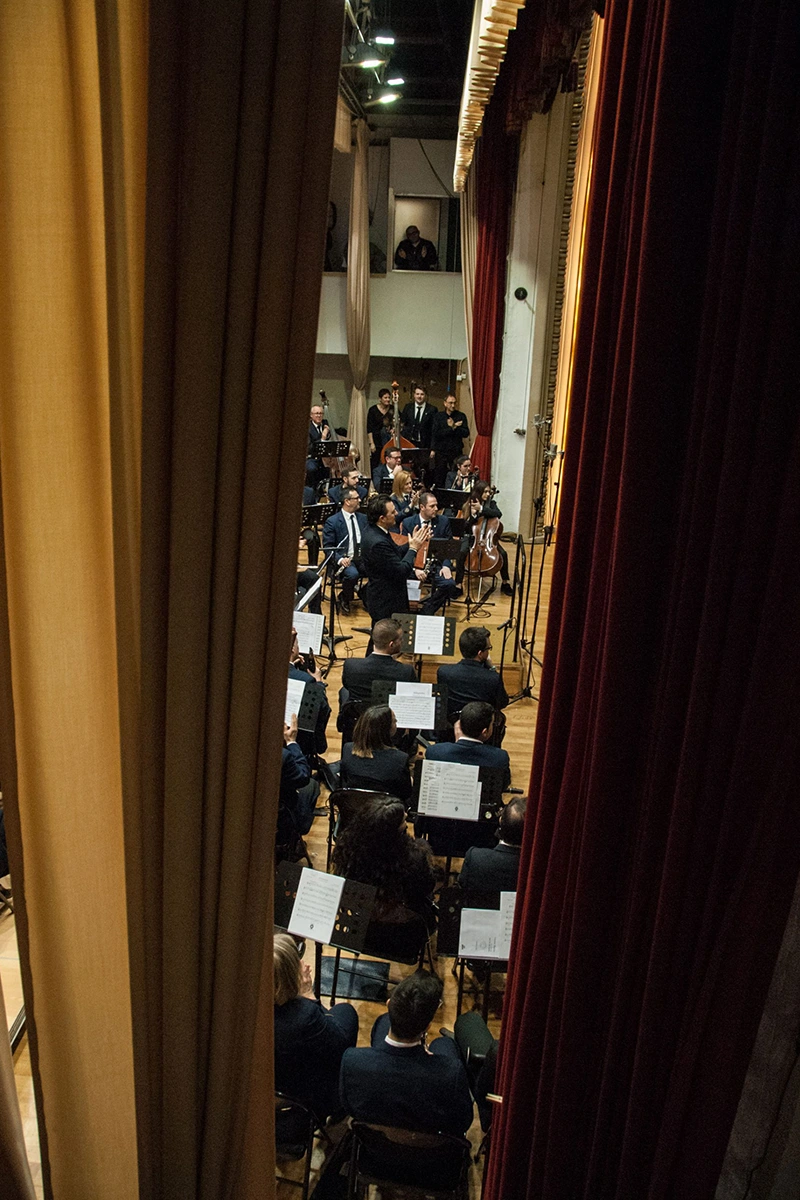
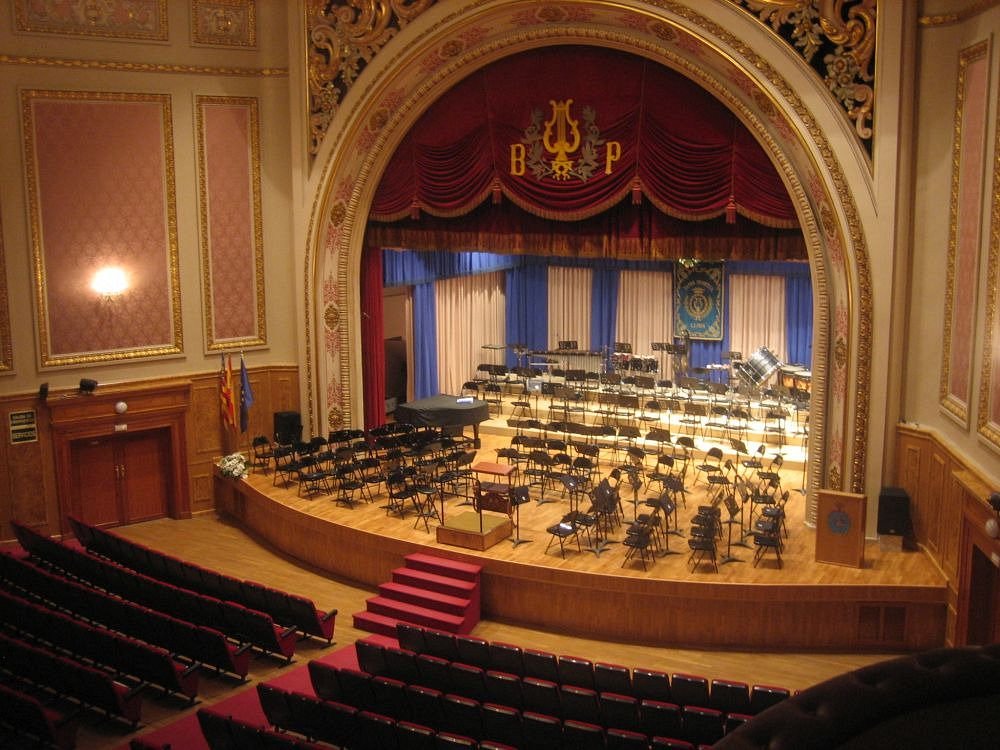
Banda Primitiva Auditorium
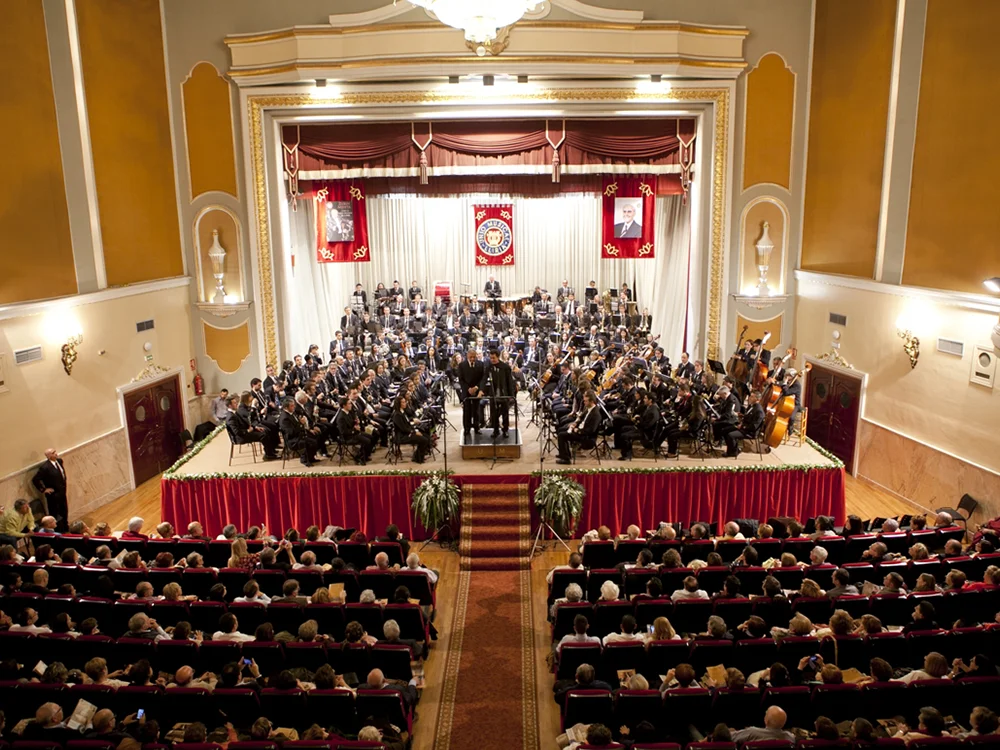
Founded in 1819, this society's auditorium stands as one of the most prestigious wind band concert venues in the Valencian Community. Featuring meticulously engineered acoustics and seating for hundreds of patrons, it hosts major Primitiva concerts, national and international band competitions, and premier cultural events. Its architectural significance also makes it an essential landmark far beyond the realm of music.
Unió Musical Auditorium
Founded in 1903, the Unió Musical features a grand auditorium of immense architectural value. It serves as the primary home for performances by its symphonic band, youth orchestra, and the numerous ensembles comprising this historic society. The auditorium regularly serves as a stage for national band competitions and performances in the Clásicos Llíria City of Music concert series.
The Municipal Auditoriums
The Llíria City Council directly oversees three public theater-auditoriums that enhance the city's network of musical venues:
Conservatory of Music Auditorium
A versatile multipurpose venue integrated within the Llíria Professional Conservatory of Music, hosting educational concerts, student recitals, and mid-sized musical events. It serves as both a performance hall and a learning space, where every concert forms an integral part of musical training.
SENIOR CITIZENS' CENTER AUDITORIUM
A mid-sized theater-auditorium presenting a diverse musical lineup throughout the year, with particular emphasis on chamber music ensembles and smaller groups from the musical societies.
Multipurpose Center
A versatile venue suited for events of various formats and capacities, accommodating everything from intimate recitals to larger productions when the main auditoriums are occupied.
Pla de l'Arc Pavilion
For major events—large competitions, band festivals, and mass concerts—Llíria offers the Pla de l'Arc Pavilion. As the city's highest-capacity facility, it comfortably accommodates regional and nationwide performances.
Historic Venues
Where heritage and music embrace
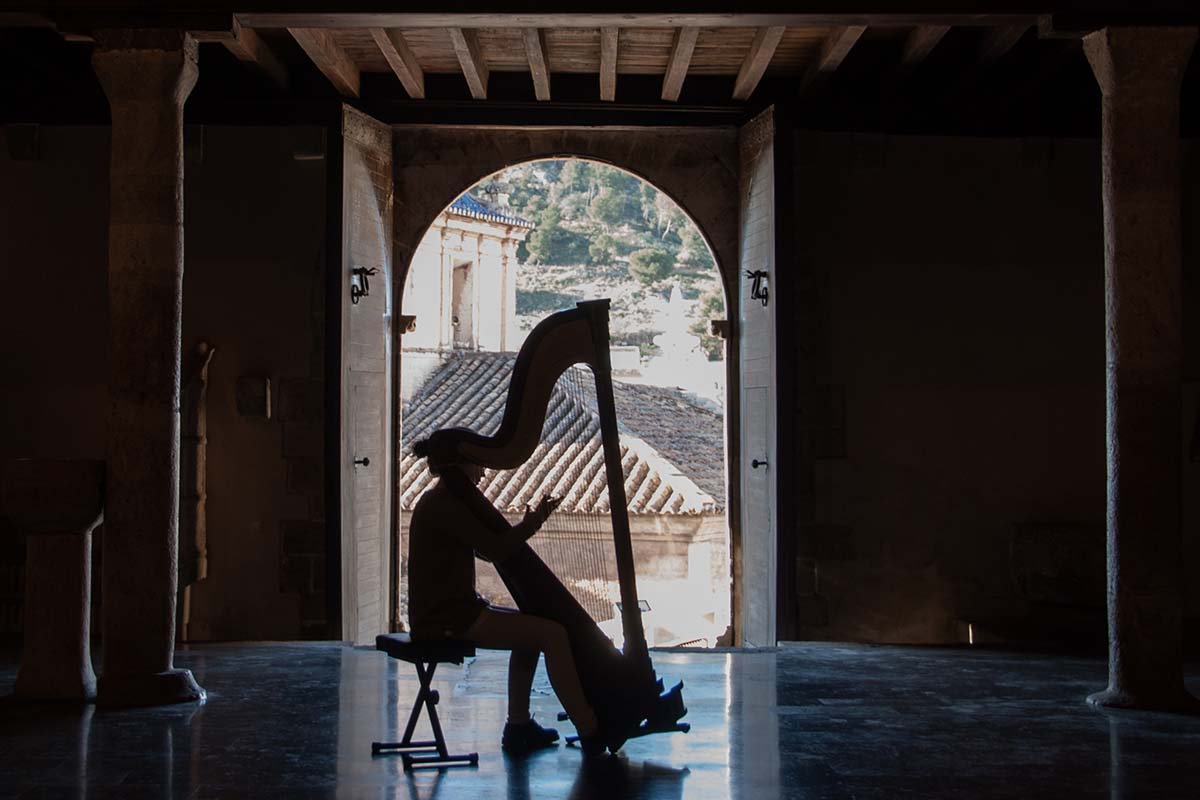
What sets Llíria apart from any other musical city in the world is the opportunity to experience music in settings that span centuries—or even millennia—of history. The city features a network of historic heritage sites that regularly transform into performance spaces of incomparable character.
Oracular Sanctuary and Roman Baths of Mura
Llíria's most breathtaking archaeological venue. Dating back to the 1st century AD—and considered historically more significant than the baths of Pompeii—this complex hosts sunset concerts where music seamlessly blends with ancient stone. It serves as a signature setting for the eMe Festival (Early Music of Edeta) and the Llum Fest, where artistic lighting transforms the ruins into an otherworldly stage.
Church of the Blood (13th Century)
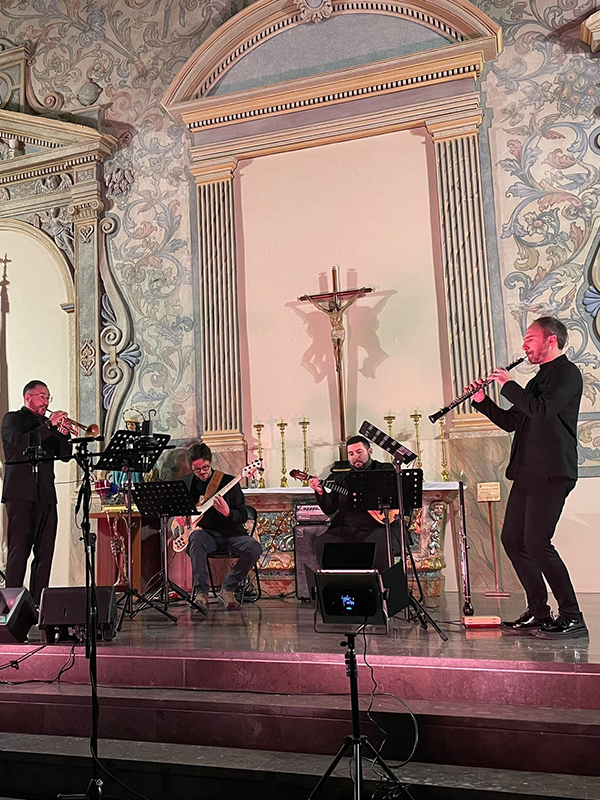
A National Monument and a masterpiece of Valencian Reconquista Gothic architecture. Featuring a polychrome Mudéjar coffered ceiling and natural acoustics, this 13th-century church is one of the most distinctive settings in the Valencian Community for chamber music, choirs, and early music. It has hosted collaborative performances with fellow UNESCO Creative Cities, such as the concert held with Granada, Creative City of Literature, in November 2025.
Arab Baths (12th Century)
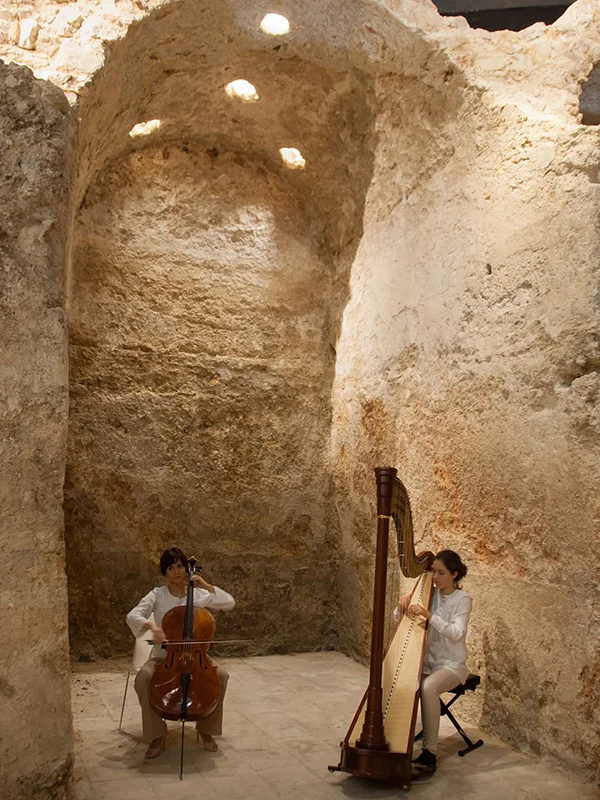
This 40 m² gem of 12th-century Islamic architecture provides an intimate, evocative setting for small ensembles, medieval music, and early music recitals—transporting audiences back to the era when Llíria flourished as an Arab medina.
Roman Mausoleums
These 1st-century funerary monuments, part of ancient Edeta's necropolis, have hosted unique performances that unite heritage, history, and music in an extraordinary cultural experience.
Historic Churches
Five churches across Llíria regularly host sacred music concerts, choral performances, and organ recitals: the Church of the Assumption (17th century, showcasing an impressive Baroque altarpiece-façade), the Church of the Good Shepherd (14th century), the Church of Our Lady of the Remedy, and others—each offering distinct acoustics and an unforgettable atmosphere.
Royal Monastery of San Miguel
Founded by James II of Aragon in 1319, this monastery atop San Miguel Hill provides one of Llíria's most evocative musical settings: an atmosphere of serenity and beauty accompanied by panoramic views across the Camp de Túria region.
The Street as a Stage
— Open-Air MusicLlíria's Mediterranean climate turns the entire city into an open-air stage throughout much of the year. The plazas, streets, and parks across the historic quarter—particularly the Plaza Mayor and the historic Vila Vella—regularly host:
Musical processions during Holy Week, when full wind bands parade through the historic center in one of the city's most stirring musical spectacles. Street parades (pasacalles) and morning reveilles (dianas) during the patron saint festivities of Saint Vincent and Saint Michael. Summer concerts in the San Vicente Natural Park and historic gardens. Spontaneous open-air performances by students of the musical societies' academies.
UNESCO Creative City of Music
Llíria City of Music
· Institutional and Cultural Portal
· Llíria City Council